About Sodium Lauryl Sulphate
Sodium lauryl sulphate (SLS), also commonly referred to as
sodium dodecyl sulfate (SDS), is a highly effective
anionic surfactant used across cosmetic, cleaning, pharmaceutical, and food industries.
Versatile Surfactant for Multiple ApplicationsSodium Lauryl Sulphate (SLS) offers outstanding performance as a surfactant and foaming agent, making it ideal for use in cleaning products, personal care formulations, and laboratory applications. Its compatibility with most anionic and nonionic surfactants further extends its usefulness for various manufacturers seeking reliable, high-purity ingredients.
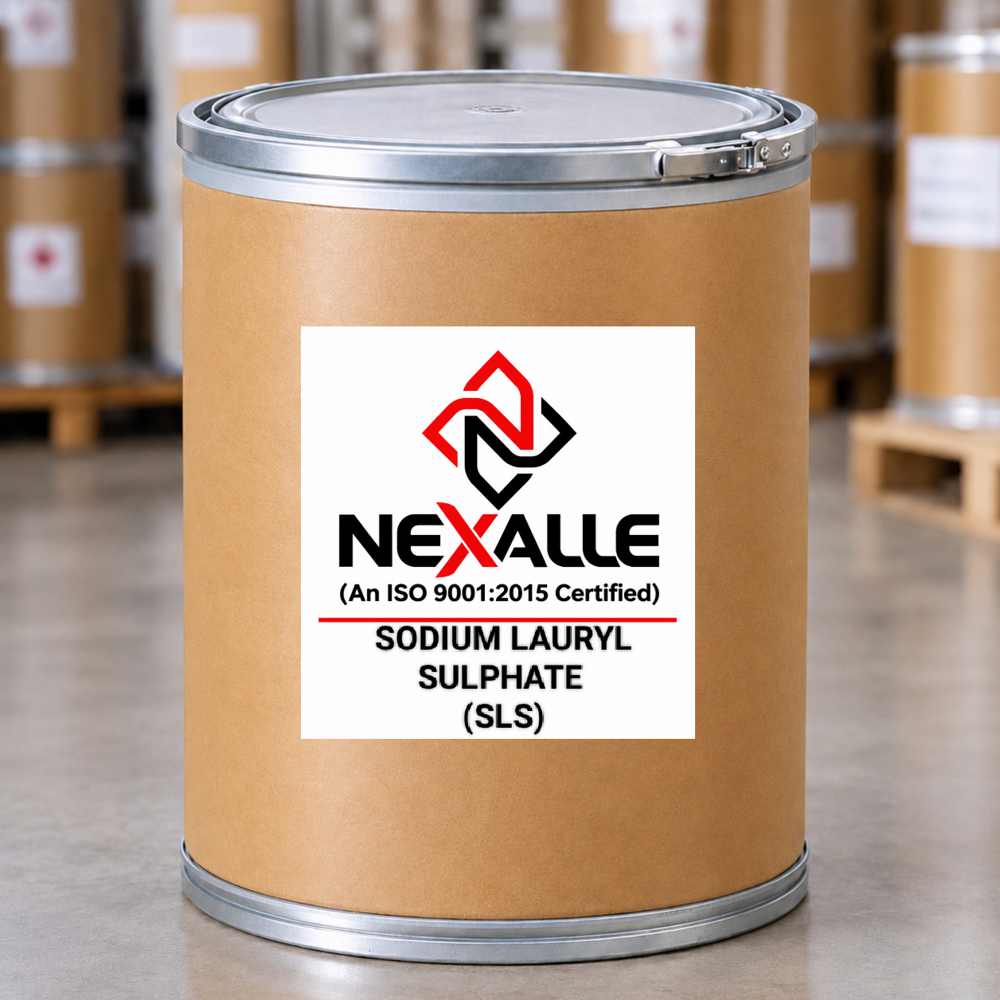
Safe Handling and StorageThough efficient and effective, SLS can irritate the skin and eyes. Always use appropriate protective equipment while handling. Store SLS in fiber drums with liners in a cool, dry, and well-ventilated area, and keep the container tightly sealed to maintain its integrity and ensure a shelf life of up to two years.
FAQ's of Sodium Lauryl Sulphate:
Q: How should Sodium Lauryl Sulphate be safely handled during use?
A: SLS should be handled with care, as it is an irritant to eyes and skin. Always wear proper protective gloves, clothing, and eye protection. Work in a well-ventilated environment and wash your hands thoroughly after handling.
Q: What are the main applications of Sodium Lauryl Sulphate?
A: SLS is commonly used as a surfactant and foaming agent in detergents, shampoos, toothpaste, cleaning agents, and as an emulsifier in various industrial and cosmetic formulations.
Q: When does Sodium Lauryl Sulphate expire, and how can I maximize its shelf life?
A: SLS typically has a shelf life of two years if stored properly. To extend its usability, keep it in its original, tightly-sealed packaging in a cool, dry, and well-ventilated area away from moisture and direct sunlight.
Q: Where is Sodium Lauryl Sulphate best stored for safety and stability?
A: Store SLS in fiber drums with liners, in a designated cool, dry, and well-ventilated storage area. The optimal storage temperature ranges from 10C to 30C at room conditions.
Q: What is the process for dissolving Sodium Lauryl Sulphate for commercial use?
A: SLS is freely soluble in water and can be easily dissolved by slowly adding the powder or granules into water with gentle stirring, ensuring a homogeneous and efficient solution suitable for various formulations.
Q: What are the key benefits of using Sodium Lauryl Sulphate in product formulations?
A: SLS provides exceptional surface-active and foaming properties, enhances emulsification, and is compatible with both anionic and nonionic surfactants. Its high purity and easy solubility make it a preferred choice for manufacturers across different industries.





 Send Inquiry


 Send Inquiry
 Send Inquiry
 Send SMS
 Call Me Free
